When developing new rigid plastic packaging, material selection, container design, manufacturing processes and sustainability requirements are not independent decisions. The final solution stems from a combination of several factors: the product to be packed, bottle-formulation compatibility, required performance, aesthetic requirements and industrial targets.
In rigid packaging, the choice of manufacturing process is closely linked to the material selected, the container’s design and functional features, and production requirements. Material properties determine compatibility with different converting technologies, narrowing down the range of viable manufacturing processes. Within these options, container configuration, production volumes and industrialisation objectives all contribute to identifying the most appropriate process in terms of performance, efficiency, process stability and production repeatability.
For this reason, manufacturing process definition should be addressed from the earliest stages of packaging development.
Product and Industry Requirements as the Starting Point for Packaging Design
The primary factor to be considered is the product that the container is intended to protect, preserve and dispense or deliver effectively.
A household detergent, cosmetic cream, beverage or pharmaceutical product will have different requirements in terms of protection, chemical compatibility, ergonomics, safety and use.
Alongside formulation compatibility, the packaging must meet a range of performance and design requirements, including strength, transparency, lightweighting, surface quality, dimensional accuracy, ergonomics and product recognisability.
These are complemented by the specific functional requirements of each end market:
- in home care, packaging must ensure chemical resistance, durability and economic competitiveness at high volumes, especially when the container itself plays an important role in on-shelf brand recognition;
- in personal care, container aesthetics and shape, surface finish and formulation compatibility become particularly important;
- in food & beverage, lightweighting, transparency and food-contact safety are key drivers;
- in the pharmaceutical sector, dimensional accuracy, repeatability and quality control become critical requirements.
Container capacity and configuration, wall thickness distribution, material selection, the possible integration of handles or dosing systems, and compatibility with filling lines complete the set of parameters to be assessed, as they can all influence the choice of manufacturing solution.
Only by systematically evaluating these factors can the most appropriate process be identified in line with the project’s objectives, while avoiding standardised approaches that fail to account for specific application requirements.
Materials and Manufacturing Processes
Material selection also influences the choice of converting technologies, as the properties of each material determine its compatibility with specific manufacturing processes and affect the possible container configurations.
The most common materials used in the packaging industry include widely used thermoplastic polymers. In the rigid packaging sector, where Serioplast is a market leader, two materials are of particular importance: HDPE (High-Density Polyethylene), which belongs to the polyolefin family, and PET (Polyethylene Terephthalate), from the polyester family.
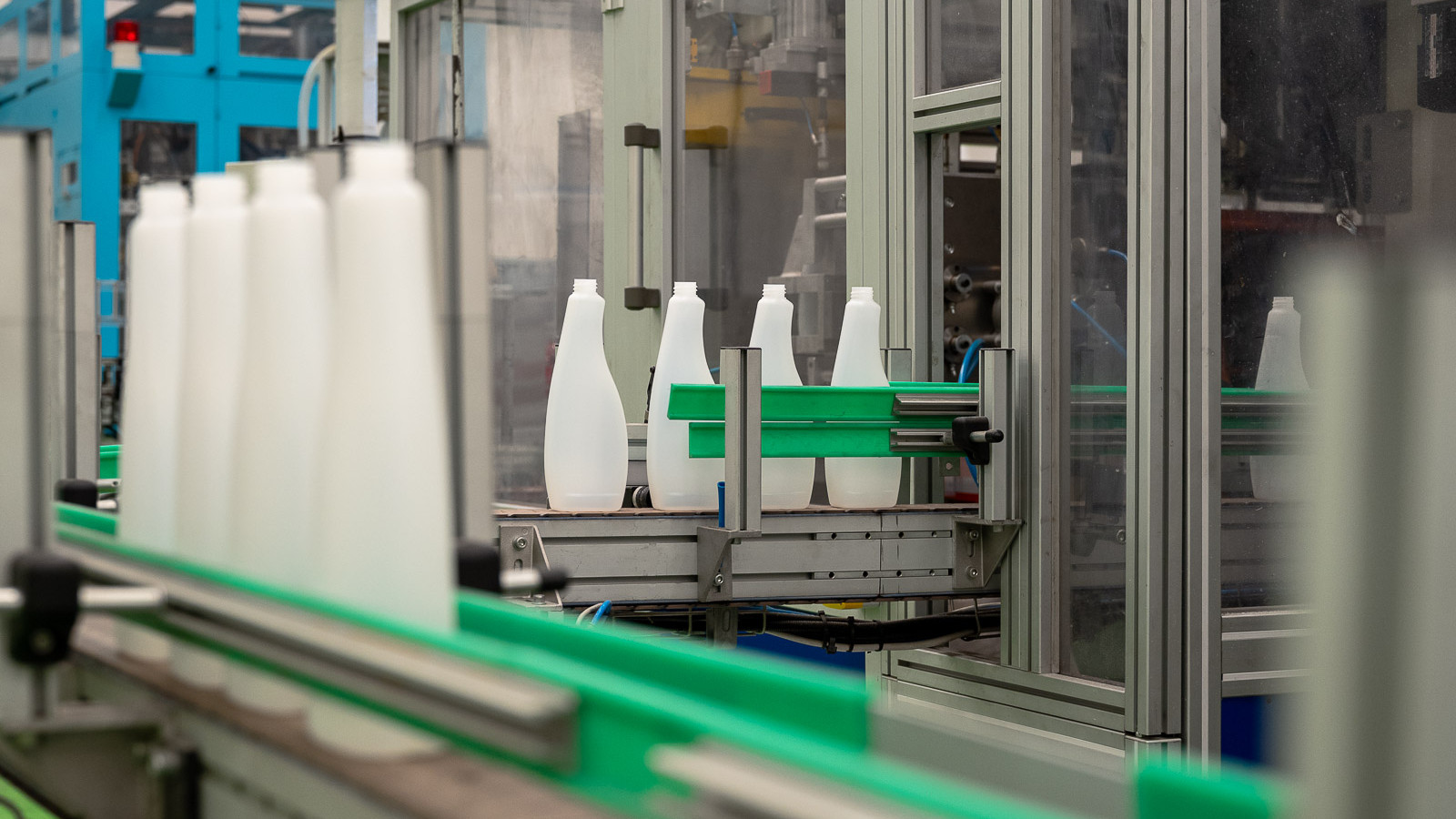
For many HDPE applications, for example, Extrusion Blow Moulding (EBM) can be used to manufacture containers offering high design freedom in terms of shape, while also being suitable for large scale industrial production. The technology is particularly relevant to the manufacture of bottles and rigid containers across various FMCG markets.
When a project involves PET instead, Stretch Blow Moulding (SBM) is the reference manufacturing technology. PET makes it possible to combine features such as transparency, low weight, strength and high visual quality.
This means that EBM and SBM should not simply be regarded as alternative technologies to be compared at the end of the development process. Instead, they should be considered as material–process combinations, assessed according to the performance required from the packaging.
Other manufacturing technologies may be appropriate where a project has specific requirements. Injection Blow Moulding (IBM), for example, can be used for certain applications requiring high precision and dimensional control, while Injection Moulding (IM) is used to manufacture specific components such as closures and preforms.
These examples should not, of course, be interpreted as absolute rules. In industrial practice, the final choice always depends on the balance between product characteristics, required performance, production volumes, the material used and filling-line requirements. It is this overall assessment that makes it possible to identify the most appropriate process and avoid standardised solutions that may not meet the actual needs of the project.
The Value of Eco-design and Industrial Approach
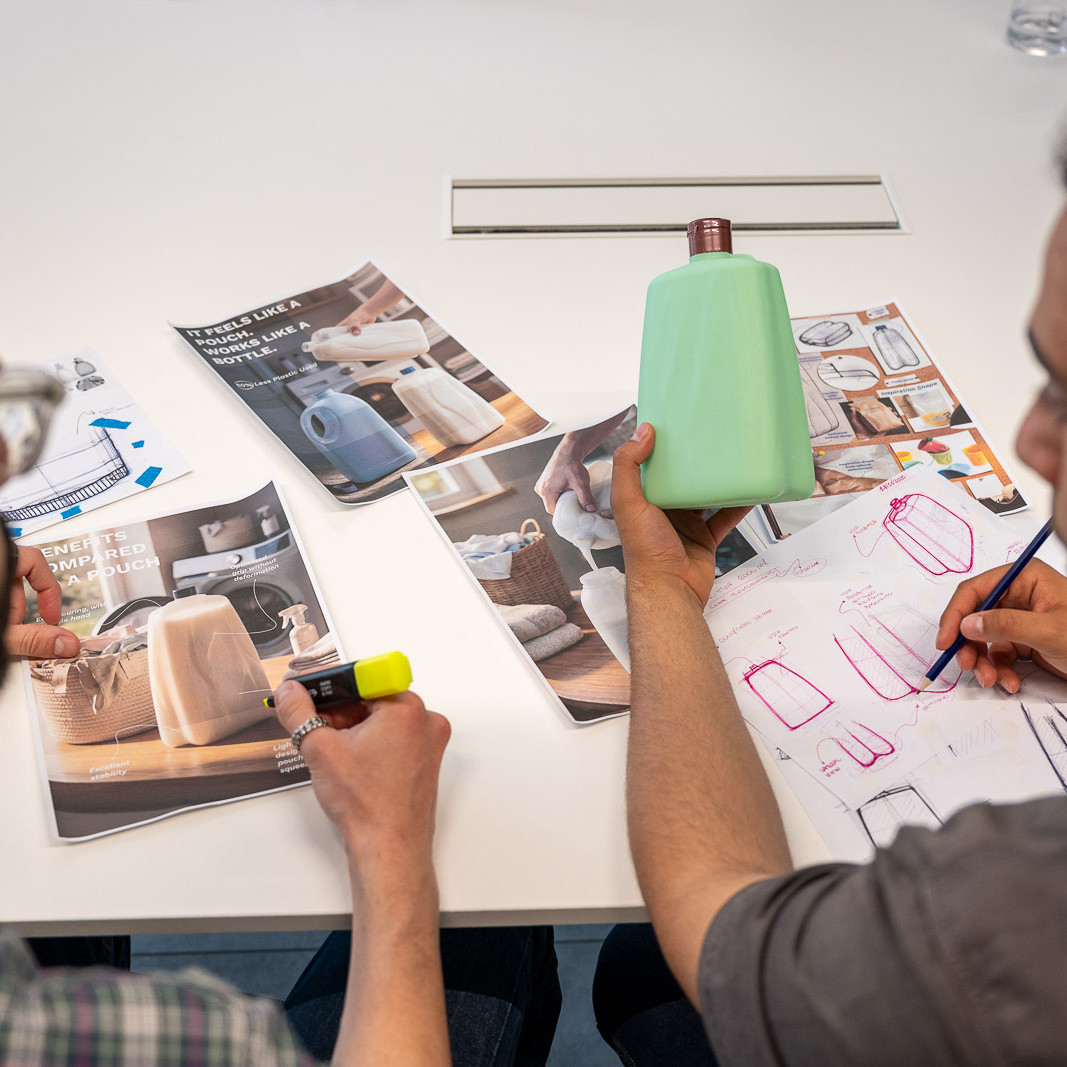
Bringing an industrial perspective into the early stages of bottle concept development enables assessment of manufacturability in advance, analysis of wall thickness distribution, optimisation of container weight and identification of potential issues related to mould design, material selection and downstream filling operations.
At this stage, combining expertise in design, engineering and industrialisation becomes strategically important. It allows technological and manufacturing constraints that could affect bottle production to be considered from the outset.
This is the approach adopted by SerioHub, the Serioplast Group’s innovation hub dedicated to creative design and packaging engineering. Here, design, simulation and industrial development work in synergy from the earliest stages of a project to identify solutions suited to its specific application requirements.
This methodology can reduce the risk of modifications at later stages of product development, optimise industrialisation lead times and improve manufacturing process stability. These benefits become particularly important in high-volume production or when the same product needs to be manufactured consistently across multiple production sites.
In this context, having expertise across the packaging value chain – from design and manufacturing through to recycling – provides additional value. Industrial models such as that of the Serioplast Group make it possible to approach packaging development from a broader and more integrated perspective.
Access to different manufacturing technologies is important, but technology alone is not enough. What also matters is the ability to assess application requirements, industrialise the packaging, maintain consistent quality standards and support future product developments.
This is particularly relevant for international brands and groups that need to ensure continuity of supply, consistent quality and alignment across different markets. From this perspective, Serioplast adopt a global, integrated approach combining an international manufacturing footprint, technical expertise and supply-chain capabilities.
Design, material and manufacturing process therefore work together to define the most appropriate industrial production set-up. The manufacturing process is not simply a technical choice: it is a strategic decision with implications across the entire supply chain.
Conclusions
Identifying the most appropriate manufacturing process for rigid plastic packaging requires an integrated assessment of the product to be packed, the selected material, container configuration, production volumes, quality requirements and wider industrial objectives.
An effective approach starts with the specific requirements of the project. Only by considering these factors together is it possible to develop containers that are efficient, fit for their intended application and suitable for high-volume production.
In a market where lead times, quality and flexibility are increasingly important, designing packaging with industrial manufacturing in mind from the outset is the first step towards turning an idea into a robust, scalable solution.
Share: