Within the context of the circular economy, the debate often focuses on recycled materials, separate waste collection and new European regulations. However, it is important to consider that a container’s environmental impact is largely determined during its production, before the product reaches retail shelves.
Engineering plays a crucial role at this stage, as it defines packaging characteristics that will influence its entire life cycle: from the amount of material used to the possibility of incorporating recycled plastic, from compatibility with manufacturing processes through to recyclability at end of life.
It is from this perspective that ecodesign has taken on an increasingly central role in the development of rigid plastic containers. This approach goes beyond compliance with new regulations: it integrates industrial performance, sustainability and efficiency from the earliest stages of development, enabling new opportunities for innovation within the industry.
In this field, ecodesign has a strong engineering dimension: reducing resource use must be balanced with the technical performance, safety and functionality required from the container.
Ecodesign Changes the Starting Point of Packaging Development
Until a few years ago, container development followed relatively well-established criteria: preserving product integrity, enhancing the brand’s visual identity, ensuring manufacturability at industrial scale and controlling costs.
Today, these objectives remain fundamental, but they are no longer sufficient.
Changes to the European regulatory framework, the growing focus on circularity and corporate sustainability targets require new engineering variables to be incorporated from the earliest stages of development, when materials, container design and manufacturing processes can still be significantly adjusted.
A bottle therefore needs to address questions that, until a few years ago, tended to be considered only at a later stage:
- will it be readily recyclable?
- can it incorporate recycled material while maintaining the required performance?
- will it be compatible with existing sorting and recycling streams?
- can it be manufactured efficiently on a global scale?
Ecodesign stems precisely from integrating these questions right from the product’s design stage.
The New Variables Driving Packaging Engineering
Materials: Designing with Processability in Mind
The use of recycled materials is reshaping plastic packaging industry, while introducing new and complex technical challenges.
Post-consumer materials may have different rheological, mechanical, chemical and aesthetic properties compared with virgin resins. For this reason, the container needs to be designed from the outset by considering the characteristics of the material to be used and its behaviour during the converting process.
This is not simply a matter of replacing one raw material with another. Container design, wall thickness and material distribution, technical specifications and production parameters must be adapted to ensure that the packaging maintains the required levels of quality, safety, reliability and process stability. Assessing the use of recycled materials in specific applications therefore requires the involvement of different areas of expertise within Serioplast, including R&D, Procurement and Quality.
Centro Plastica, a Group company specialising in mechanical recycling, also contributes in this area. It supports the development of recycled materials primarily intended for rigid packaging through sorting, characterisation and optimisation activities.
Engineering: Redesigning, Not Simply Lightweighting
The shape of the container is also becoming increasingly important in ecodesign.
Every engineering choice affects overall weight, material distribution, mechanical strength, stability during transport, compatibility with filling lines and, in some cases, sorting and recycling operations.
The challenge is to achieve the best possible balance between raw material consumption, technical performance and production efficiency. This requires simulation tools, engineering expertise and close collaboration between engineering and industrialisation.
The lightweighting process also follows the same principle: reducing packaging weight and wall thickness without compromising packaging functionality, safety and performance. The critical area identifies the threshold beyond which any further reduction in material could affect these aspects. Depending on the application, this limit may be determined, for example, by top-load resistance or the need to protect the product from external factors such as oxygen, light or moisture.
Manufacturing Processes and Engineering Must Develop Together
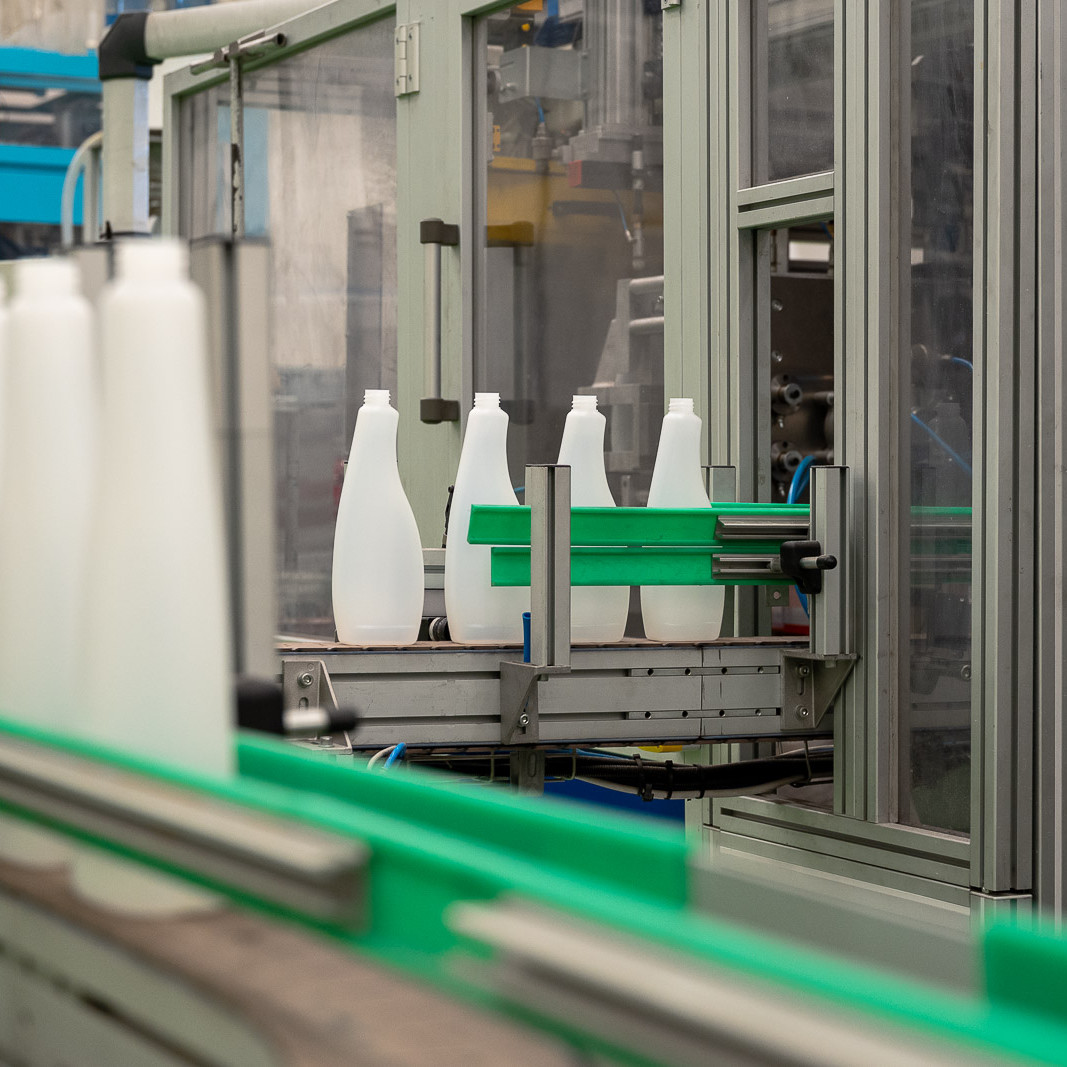
Ecodesign also changes the relationship between design and manufacturing: decisions made during container development directly affect industrial feasibility, start-up times, finished product quality and process stability.
For this reason, packaging development increasingly involves multidisciplinary expertise from the earliest stages.
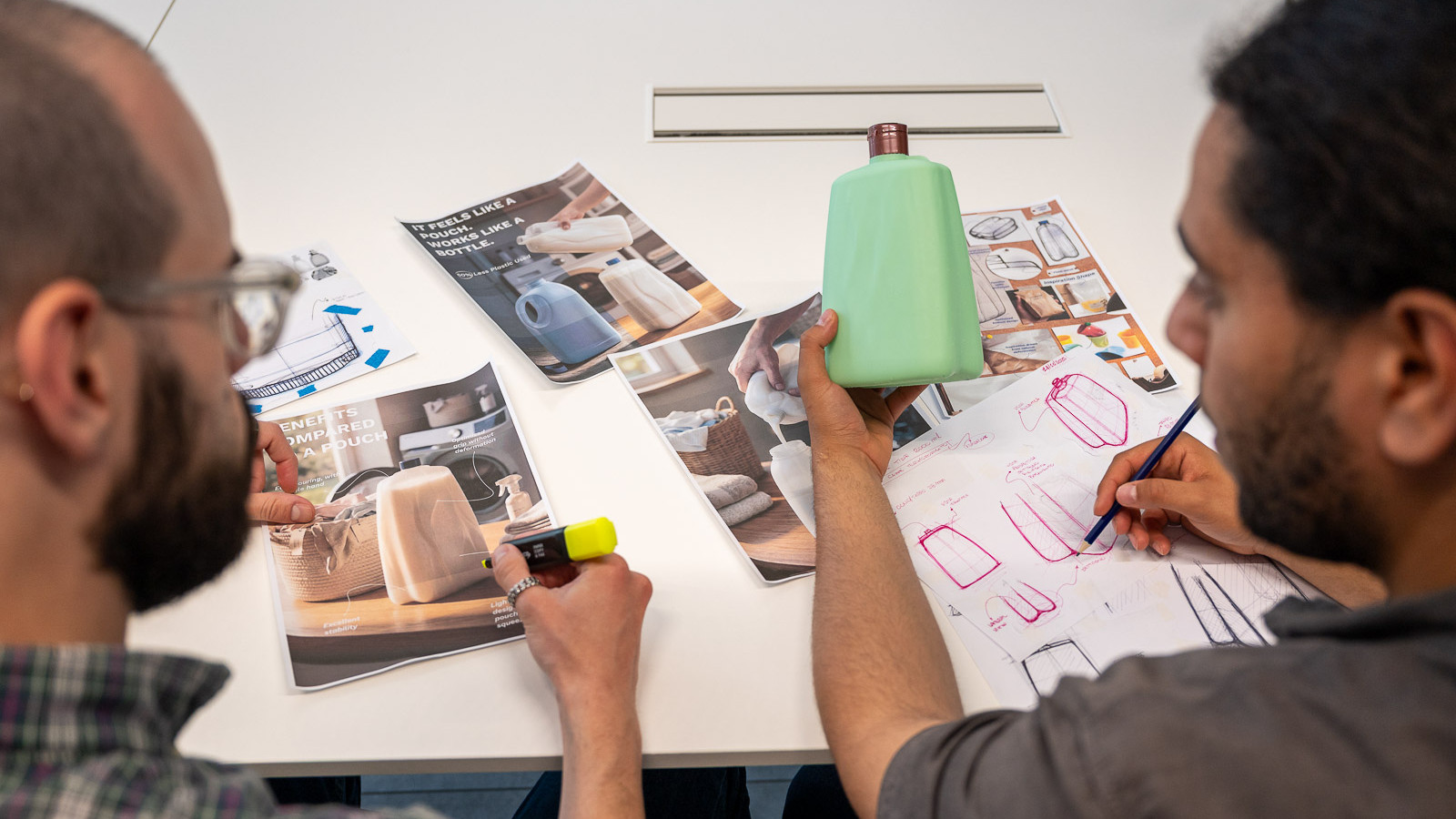
Within the Serioplast Group, this approach is implemented through SerioHub, the innovation hub dedicated to packaging development, where expertise in design, simulation and engineering come together to develop solutions that combine sustainability, production efficiency and application requirements, while maintaining a clear focus on essential factors such as aesthetics and consumer experience.
End of life
Today, containers are also designed by considering what will happen after use.
Material selection, compatibility between different components, separability and the quality of the recovered material become central elements of packaging development.
This is the principle behind Design for Recycling: designing packaging and its components with their compatibility with relevant sorting and recycling streams in mind. This means assessing both the production environment and the local waste management infrastructure, with a clear understanding of how the waste management chain operates in practice. In this context, components such as labels, inks and additives can affect the recycling process or the quality of the recycled material. For this reason, where possible, mutually compatible materials are preferred and solutions that may hinder sorting or recycling are limited.
From Ecodesign to Circular Packaging
The terms ecodesign and circular packaging are often used interchangeably, but they describe two different concepts.
Ecodesign is the design methodology. Circular packaging is the outcome this methodology seeks to achieve.
A container designed according to ecodesign principles can make a tangible contribution to the circular economy only if the different stages of its life cycle are considered consistently: material selection, manufacturing, use, collection, sorting, recycling and the potential return of recovered material into new production cycles.
This is a systemic approach that goes beyond the individual product and encompasses the entire value chain.
How a Container is Developed According to Ecodesign Principles
In an industrial context, a packaging project designed with circularity in mind may develop through several key stages.
1. Defining the project objectives
Every development project starts with the end-use application, considering the product to be packaged, regulatory requirements, Client expectations and sustainability objectives. These factors need to be considered alongside the technical and production requirements that the container will need to meet.
2. Concept development
Engineering defines the container’s shape, weight, material distribution and expected performance, while also assessing compatibility with the manufacturing process. At this stage, functional, aesthetic and environmental considerations are therefore evaluated in relation to the future industrialisation of the container.
3. Material selection
The polymers best suited to the application and the required performance are identified. When recycled material is being considered, its characteristics and processability also need to be assessed to determine how it can be incorporated without compromising the packaging’s quality and performance requirements.
4. Industrial validation
Simulation, prototyping and production trials make it possible to verify the manufacturability of the container and optimise the process before industrialisation, assessing its performance under the intended production conditions and its compliance with the requirements defined during the development stage.
5. Designing for circularity
The packaging is also developed with its end of life in mind: material and component selection and compatibility, separability, and behaviour during sorting and recycling processes. The aim is to facilitate material recovery and, where possible, its reintroduction into new production cycles.
This approach makes it possible to address sustainability, quality and efficiency as interconnected elements of the same industrial project, rather than as separate objectives.
Conclusions
Ecodesign requires companies and manufacturers to consider the entire life cycle of a container, integrating technical, manufacturing, environmental and regulatory considerations from the earliest stages of development.
For this reason, the value of a packaging project does not depend exclusively on the material used, but also on the ability to connect engineering, manufacturing and end-of-life management within a shared industrial approach.
It is through this integration that packaging can make a tangible contribution to circular economy objectives, transforming sustainability from a design requirement into a driver of innovation across the entire value chain.
Share: